Oxford
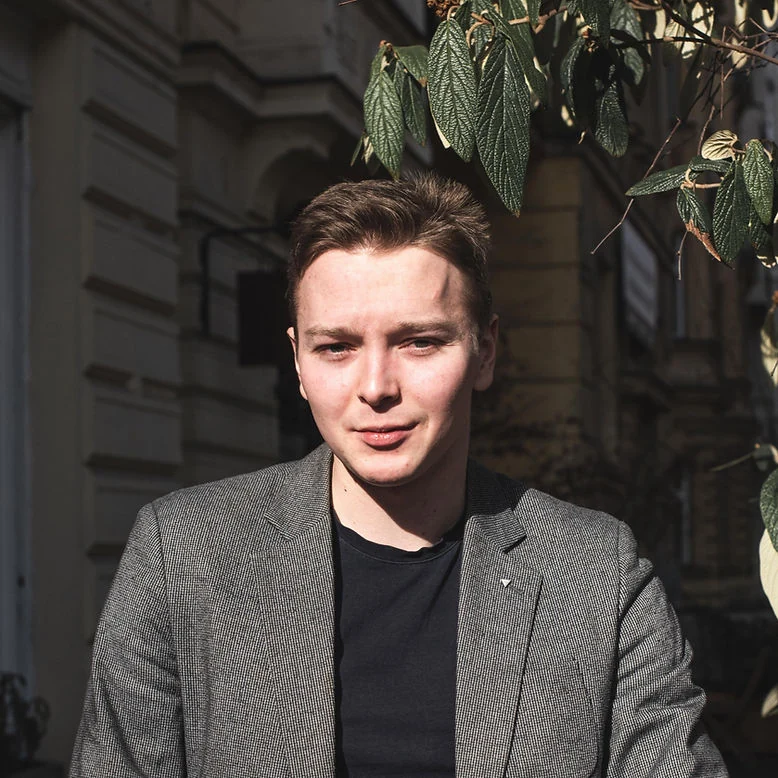
Jakub Lehký
Law (master’s, 1 year)
Funding needed£ 14 173
Read their story
Today's law was created for a world that no longer exists. The climate crisis confronts us with questions that legal provisions alone cannot answer: How can we ensure a habitable planet for 9 billion people in 2040 while protecting their human rights? What do we need to do today to prevent the green transition from having unfair consequences for the most vulnerable? And what role should courts play in addressing problems that extend beyond national borders and electoral terms?
It was the complexity of these challenges that led me to environmental studies after studying law. I am trying to understand how to ensure that our rules are finally grounded in clear scientific evidence. By this I mean not only important figures and charts, but also a deep understanding of social realities, including the voices of people who fear the transition and may have believed misinformation about wind turbines. I believe that law often lacks this social science perspective, and this is the gap I am trying to fill.
I am already putting this comprehensive approach into practice. As a judicial assistant at the Constitutional Court, I work on protecting fundamental rights in the most complex cases every day. Recently, for example, I discovered that a lawyer had cited fictitious decisions generated by artificial intelligence in a constitutional complaint. This resulted in the first procedural fine of its kind in twenty years, because virtually nothing remained of the complaint once the AI fabrications were removed. We were thus able to establish clear boundaries for these exceptional cases while protecting the complainant's procedural rights, giving them an opportunity to supplement their constitutional complaint.
Scouting inspired my desire to help society face today's challenges, and I now pass that motivation on to others. For ten years, I have led courses preparing future Scout leaders to educate young people meaningfully in a turbulent world. Through the academic association Lexicon, I also organise seminars with leading experts from Czechia and across Europe, seeking to improve the Czech legal community and strengthen students' belief that law can make the world a better place. This is something I want to continue after returning to Czechia.
At the University of Oxford, I plan to focus on environmental law, human rights and constitutional law: fields that are essential to asking the right questions and finding the best answers in a time of climate crisis. Inspired by the Oxford Martin School and the Environmental Change Institute, I hope to establish the first Czech interdisciplinary centre for environmental challenges, bringing together law and environmental sciences. In this way, I will contribute to a future that is not only sustainable but also fair for everyone.